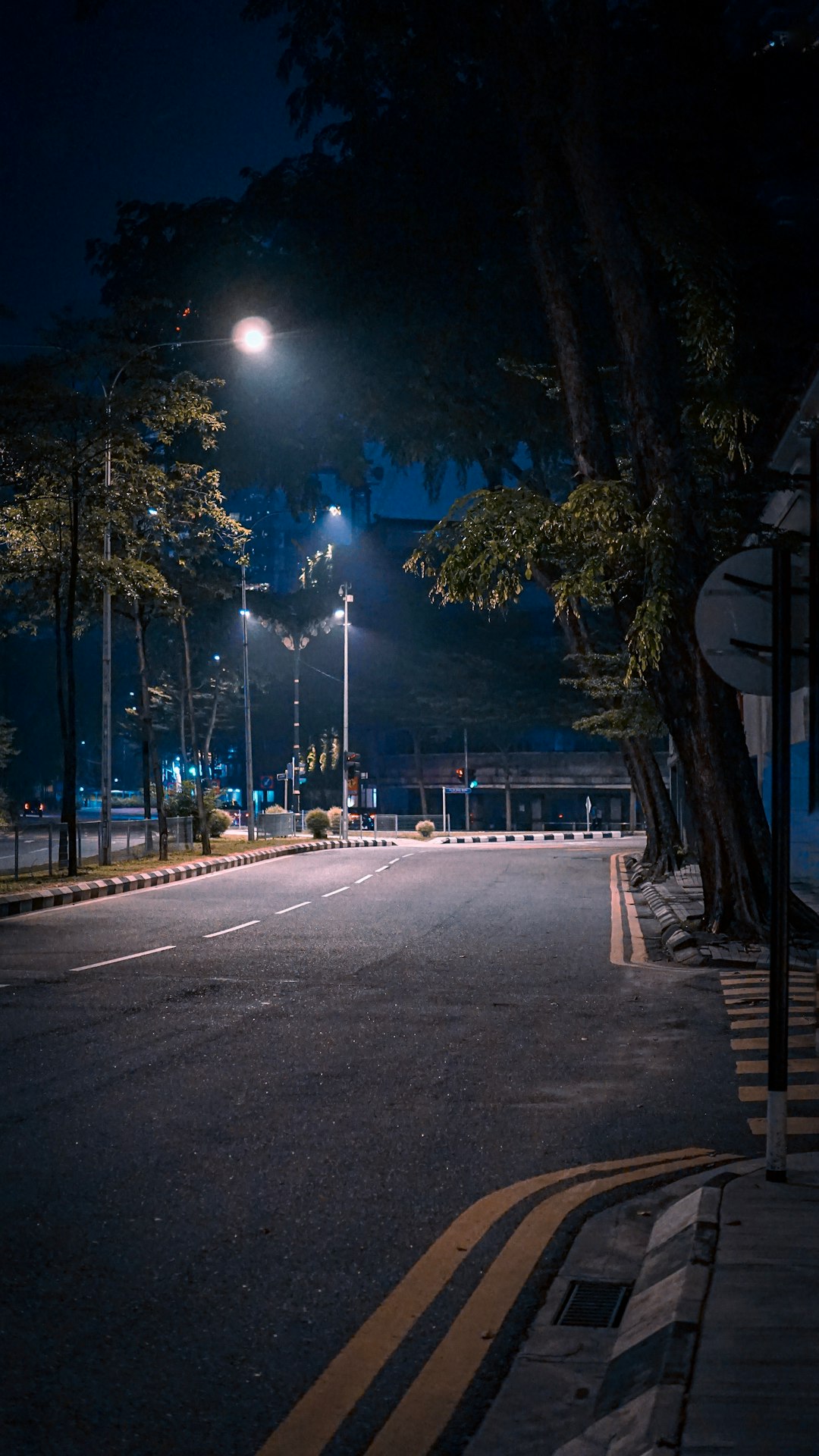

The first design task is identifying the applicable lighting category. A quiet access street is not assessed in the same way as a route carrying regular traffic, a pedestrian precinct or a junction where vehicles and people interact. Traffic volume, speed, road width, bends, crossings, parking and nearby land uses can all affect the assessment. A truck route serving a warehouse may need a different arrangement from a residential street beside a school or shopping area. The category should be recorded in the design documentation rather than assumed from the road name. For projects involving AS/NZS 1158 lighting for roads, that early decision helps prevent unsuitable calculations and avoidable redesign.
Maintained illuminance refers to the useful light expected during the installation’s service life, not merely the reading taken on the first night. Luminaires can lose output as they age, and dirt or other depreciation can reduce the light reaching the road. The design therefore needs to account for the condition expected during operation. Uniformity matters as well. A road may have a satisfactory average level yet contain bright pools separated by dark sections. Those changes can make a pedestrian, cyclist or fallen object harder to detect. Design reviews should examine both the calculated level and the distribution across the carriageway, footpaths and relevant conflict areas.
Glare is a separate concern from insufficient light. A luminaire that appears excessively bright from a driver’s approach can reduce comfort and make darker objects less distinct. Mounting height, optical distribution, tilt, shielding, spacing and the driver’s position all influence the result. A fitting beside a bend may be visible for longer than one on a straight section. Nearby windows also matter. If residents can see the bright face of a luminaire from a bedroom, changing its orientation or optic may be more effective than lowering every fitting’s output. The proposed arrangement should be reviewed from road approaches and nearby properties, not only from the pole location shown on plan.
Unwanted light outside the road corridor deserves its own check. Spill can reach homes, adjoining land, vegetation or areas that are intended to remain relatively dark. A street along a rural boundary has fewer buildings to contain light than a built-up block, so the same fitting arrangement may produce a different result. Photometric modelling can indicate where light falls, but the model depends on accurate pole heights, mounting details and surrounding features. Trees, fences, signs and future structures may alter the outcome. A useful site habit is to compare the lighting model with current photographs and the finished civil plan before ordering equipment.
The electrical installation must deliver the design safely at every fitting. Reviewers normally check supply capacity, circuit loading, voltage drop, protective devices, earthing, cable routes, switching and isolation points. Voltage drop can become material on a long run to a remote section, reducing the voltage available at the luminaire compared with the supply point. Circuit layout also affects fault response. If too many poles share one protective device, a single fault may darken a substantial length of road. Drawings should identify cable sizes, joints, pits, control equipment and access points clearly. A marked-up set of as-built drawings saves time when the first fault occurs months after handover.
Lighting calculations should be tested against the physical road rather than accepted as an abstract report. Check the carriageway widths, kerb lines, footpaths, islands, crossings, driveways and junction geometry used in the calculation. Confirm that the pole coordinates match the setting-out plan and that no sign, tree or service constraint has forced a late relocation. A short walk through the site before installation can reveal issues that a desktop review misses, including a pole positioned where a truck turns or a maintenance vehicle cannot safely stop. Recording these observations beside the drawing revision helps the designer and electrician resolve changes before excavation begins.
An upgrade in an older industrial street often has to proceed while vehicles continue using the route. The work plan may need temporary illumination, controlled isolations, protection of existing services and staged commissioning outside busy periods. A new estate road presents a different risk: poles may have been placed for visual symmetry without enough attention to bends, footpaths or future landscaping. In either case, compare the calculation with the actual layout and discuss the effect of changing pole spacing, output, shielding or circuit grouping. Energy use, glare, maintenance access and installation cost should be considered together, rather than allowing appearance alone to determine the arrangement.
Before opening the road, inspect more than the luminaire condition. Confirm cable identification, enclosure seals, terminations, earthing continuity, control operation and the accessibility of isolation points. Check that each circuit responds as shown on the schedule and that timer, photocell or other approved control settings match the intended operating arrangement. Keep the commissioning readings, test results, product data and final circuit drawings with the handover records. A contractor providing road lighting installation services can coordinate these field checks with the electrical works, while the acceptance decision remains tied to the applicable AS/NZS 1158 category, the approved design, site conditions and the authority’s requirements.